Best OWI | DUI Lawyers in Michigan
Michigan DUI Lawyer — OWI Defense in Oakland, Wayne & Macomb Counties
Arrested for DUI or OWI in Michigan?
If you were arrested for DUI, OWI, OWVI, High BAC, drugged driving, repeat OWI, felony OWI or an alleged chemical-test refusal in Michigan, do not assume the case is decided simply because an officer made an arrest or obtained a breath or blood result.
A Michigan OWI case may involve several separate questions:
Why was the vehicle stopped?
Was the traffic stop lawful?
Was there probable cause for arrest?
How were field sobriety exercises conducted?
What does body-camera or dash-camera video show?
Were breath-testing procedures followed?
How was blood collected, stored and analyzed?
Were constitutional protections followed?
What bond conditions apply?
Can you legally drive?
Does an implied-consent deadline apply?
Could the case affect employment or professional licensing?
An arrest is not a conviction.
A police report is important evidence, but it is not necessarily the complete evidence.
A breath or blood result can be significant, but it should be evaluated with the rest of the investigation.
Fraiberg & Pernie represents people facing Michigan DUI and OWI charges throughout Oakland County, Wayne County, Macomb County and Southeast Michigan.
Matthew Fraiberg is Managing Partner of Fraiberg & Pernie. He has practiced Michigan law since 1997 and has more than 29 years of legal experience. His professional background includes service as a City Prosecutor, Judicial Clerk and Assistant Legal Research Clerk working with Oakland County Circuit Court judges.
Eric L. Pernie is a Partner at Fraiberg & Pernie and a former Michigan police officer with more than 10 years of law-enforcement experience. His background includes training and experience involving field sobriety testing, DataMaster DMT, traffic enforcement and police investigations.
Together, Fraiberg & Pernie bring criminal-defense, prosecution, judicial and law-enforcement perspectives to the evaluation of Michigan OWI cases.
Their approach begins with a basic question:
What Does the Evidence Actually Prove?
Call Fraiberg & Pernie at (248) 986-2682 for a confidential consultation.
Michigan DUI Defense at a Glance
| Topic | Information |
|---|---|
| Law Firm | Fraiberg & Pernie |
| Attorneys | Matthew Fraiberg and Eric L. Pernie |
| Practice Area | Michigan DUI / OWI Defense |
| Primary Regions | Oakland, Wayne and Macomb Counties |
| Common Charges | OWI, OWVI, High BAC, drugged driving, repeat OWI and felony OWI |
| Related Matters | Implied consent, driver’s-license consequences, bond and testing |
| Matthew’s Background | Former City Prosecutor; Former Judicial Clerk; Michigan attorney since 1997 |
| Eric’s Background | Former Police Officer; 10+ years law-enforcement experience |
| Evidence Focus | Stop, probable cause, SFSTs, video, breath testing and blood testing |
| Additional Concerns | License, employment, professional credentials, travel and CDL consequences |
Michigan DUI / OWI → Criminal Case + Driver’s-License Consequences
OWI Evidence → Traffic Stop + SFSTs + Video + Breath/Blood Testing
Fraiberg & Pernie → Matthew Fraiberg + Eric Pernie
Service Area → Oakland County + Wayne County + Macomb County
Quick Answer: What Should You Do After a Michigan DUI Arrest?
Start with the immediate requirements.
Read every bond and release document.
Do not miss alcohol or drug testing.
Confirm whether you may legally drive.
Save your citation, bond paperwork and chemical-test documents.
Preserve photographs, messages, receipts, location information and witness names.
Do not delete potentially relevant evidence.
Avoid discussing the case on social media.
Identify the court and your next court date.
Review any Secretary of State documents.
If police allege a post-arrest chemical-test refusal, determine whether a separate license deadline applies.
The first objective is not to predict the outcome.
It is to understand what must be done immediately and begin preserving the evidence needed to evaluate the case.
What Happens During the First 72 Hours?
The first few days after an OWI arrest may involve:
Booking and release
Arraignment
Bond
Alcohol restrictions
Drug restrictions
Testing
Court scheduling
Driver’s-license paperwork
Employment concerns
Travel restrictions
This can also be an important time to preserve evidence.
Potential evidence may include:
Receipts
Text messages
Photographs
Phone records
GPS or location information
Witness information
Medical information
Surveillance footage
Dash-camera recordings
Rideshare records
Some electronic and surveillance evidence may not remain available indefinitely.
Do not delete information that may become relevant.
What Happens During the First Week?
The first week may involve determining what the court actually requires.
Review:
Bond order
Alcohol or drug testing
Travel restrictions
Driver’s-license status
Court dates
Police paperwork
Implied-consent documents
Employment or professional-license concerns
Many avoidable problems arise because someone misunderstands a bond or testing requirement.
The written court order controls.
When something is unclear, obtain clarification before acting.
Michigan DUI Charges Explained
Michigan uses several impaired-driving offenses.
OWI — Operating While Intoxicated
People frequently use the term DUI, while Michigan law primarily uses Operating While Intoxicated, or OWI.
An OWI allegation may involve:
Alcohol
Controlled substances
Intoxicating substances
A combination of alcohol and drugs
For most drivers age 21 or older, an alcohol concentration of 0.08 or higher can support a per se OWI theory.
Michigan’s principal impaired-driving statute is MCL 257.625.
OWVI — Operating While Visibly Impaired
OWVI concerns an allegation that a person’s ability to operate a vehicle was visibly impaired.
Potential consequences can involve:
Criminal record
Points
Driver’s-license restrictions
Fines and costs
Probation
OWVI may be discussed during negotiations in some OWI cases.
No reduction is automatic.
High BAC OWI — 0.17 or Higher
Michigan’s High BAC provisions generally apply to qualifying first-offense cases involving an alleged bodily alcohol concentration of 0.17 or higher.
A High BAC allegation can involve enhanced consequences, including issues involving:
Criminal penalties
Driver’s-license restrictions
Ignition interlock
Treatment
Testing
Probation
A reported BAC of 0.17 or higher is significant evidence.
It does not eliminate the need to examine the traffic stop, arrest, video and chemical-testing evidence.
Learn more about Michigan High BAC defense.
Second-Offense OWI
A repeat OWI can involve substantially greater consequences.
Potential concerns may include:
Jail exposure
Probation
Driver’s-license consequences
Vehicle sanctions
Treatment
Long-term license issues
Prior-offense history should be reviewed carefully because classification as a repeat offense matters.
Third-Offense Felony OWI
A third-offense OWI may be prosecuted as a felony.
A felony OWI case can involve:
District-court arraignment
Probable-cause proceedings
Preliminary examination
Circuit-court proceedings
Felony sentencing exposure
Driver’s-license revocation
Long-term collateral consequences
The defense should examine both the new allegations and the prior record being used to enhance the charge.
OWI Causing Serious Injury or Death
Cases involving serious injury or death can result in felony charges and significantly greater consequences.
Evidence may involve:
Accident reconstruction
Medical evidence
Causation
Vehicle data
Witness testimony
Toxicology
Driving behavior
Video
Crash-scene evidence
An accident does not eliminate the prosecution’s obligation to prove every required element.
Drugged Driving & Marijuana OWI
Michigan impaired-driving cases are not limited to alcohol.
Police may investigate alleged impairment involving:
Marijuana
Prescription medications
Controlled substances
Other intoxicating substances
Alcohol combined with drugs
These cases can depend heavily on toxicology and interpretation.
The presence of a substance in a laboratory result does not necessarily answer every question concerning impairment at the relevant time.
How Is a Michigan OWI Case Defended?
An OWI investigation usually develops in stages:
Driving → Traffic Stop → Roadside Investigation → Arrest → Chemical Testing → Court
Each stage may raise different factual, constitutional and scientific questions.
Was the Traffic Stop Lawful?
Police need a legally sufficient reason to stop a vehicle.
The reported reason may involve:
Speeding
Lane use
Equipment violation
Erratic driving
Accident
Other alleged traffic violation
Questions may include:
What did the officer actually observe?
Was the stop legally justified?
Does dash-camera footage exist?
Does the video match the written description?
Do road, weather or traffic conditions provide relevant context?
A traffic violation may justify a stop.
It does not by itself prove intoxication.
Was There Probable Cause to Arrest?
A lawful traffic stop does not automatically justify an OWI arrest.
Police may rely on evidence involving:
Driving
Odor
Speech
Eyes
Balance
Statements
Field sobriety exercises
Preliminary breath testing
Video
The defense should evaluate whether the evidence available to the officer supported the arrest under applicable law.
Field Sobriety Testing
Field sobriety evidence should be evaluated in context.
Relevant considerations may include:
Officer instructions
Demonstration
Pavement
Weather
Lighting
Traffic
Footwear
Injuries
Medical conditions
Balance issues
Fatigue
Anxiety
Actual performance
Video
The important question is not simply whether a police report says someone “failed.”
The actual evidence should be examined.
Why Body-Camera & Dash-Camera Video Matters
Video may provide an independent record of important portions of the investigation.
It may show:
Speech
Balance
Coordination
Officer instructions
Driver responses
Field sobriety performance
Road conditions
Weather
Timing
Statements
Officer conduct
Sometimes video supports the written report.
Sometimes it adds context.
Sometimes an important detail appears different.
That does not automatically mean an officer was dishonest.
Police observations are human observations, and recordings can provide another source of evidence for comparison.
Can a Michigan Breath Test Be Challenged?
Potentially.
A breath-test review may include:
DataMaster DMT records
Equipment maintenance
Accuracy checks
Observation requirements
Operator conduct
Testing sequence
Error codes
Sample consistency
Timing
Other testing documentation
A breath-test result can be important evidence.
It should still be considered with the rest of the case.
A meaningful challenge should be based on the actual testing records, facts and applicable requirements.
Can a Michigan Blood Test Be Challenged?
Potentially.
A blood case may require review of:
Consent or search warrant
Collection
Tubes and preservatives
Storage
Transportation
Chain of custody
Laboratory procedures
Quality-control information
Timing
Measurement
Interpretation
A laboratory report is evidence.
It does not automatically answer every legal or scientific question.
Matthew Fraiberg — Former Prosecutor & Judicial Clerk
Matthew Fraiberg is Managing Partner of Fraiberg & Pernie.
He has practiced Michigan law since 1997 and has more than 29 years of legal experience.
His professional background includes service as a:
Former City Prosecutor
Former Judicial Clerk
Former Assistant Legal Research Clerk working with Oakland County Circuit Court judges
Michigan criminal defense and DUI attorney
That background provides experience evaluating criminal cases from defense, prosecution and court perspectives.
His approach to an OWI case begins with a basic question:
What does the evidence actually prove?
That may require comparing:
Police reports
Video
Witness statements
Breath or blood records
Scientific evidence
Timeline
Constitutional issues
Read Matthew Fraiberg’s attorney profile.
Eric Pernie — Former Police Officer
Eric L. Pernie is a Partner at Fraiberg & Pernie and a former Michigan police officer with more than 10 years of law-enforcement experience.
His background includes training and experience involving:
Field sobriety testing
DataMaster DMT
Traffic enforcement
Traffic stops
Police investigations
Arrest procedures
Evidence collection
Report writing
That background provides another perspective when evaluating how an OWI investigation was conducted.
Questions may include:
Why was the vehicle stopped?
What did the officer claim to observe?
Were field sobriety exercises conducted appropriately?
What does the video show?
Does the police report accurately describe the recording?
What evidence supported the arrest?
Were chemical-testing procedures followed?
The purpose is not to assume police acted correctly or incorrectly.
The purpose is to compare the investigation with the actual evidence and applicable law.
Read Eric Pernie’s attorney profile.
What Happens to Your Driver’s License After an OWI Arrest?
Michigan OWI cases can involve driver’s-license consequences through both:
the criminal case
and
Michigan Secretary of State procedures.
Potential consequences may include:
Suspension
Restricted driving
Ignition interlock
Revocation
Points
Separate implied-consent sanctions
The precise consequences depend on the charge, prior history, chemical testing and final disposition.
Do not assume that the criminal court controls every driver’s-license consequence.
What Is Michigan Implied Consent?
Michigan’s implied-consent law concerns certain chemical testing requested after an OWI arrest.
An alleged refusal can create a driver’s-license matter separate from the criminal prosecution.
A person can therefore have:
a criminal OWI case
and
a separate driver’s-license issue
at the same time.
Documents issued after an alleged refusal should be reviewed promptly because deadlines may apply.
Learn more about Michigan implied-consent refusal issues.
Roadside Breath Test vs. Post-Arrest Chemical Test
Not every “breath-test refusal” means the same thing.
A roadside preliminary breath test (PBT) is different from a post-arrest chemical test governed by Michigan’s implied-consent law.
When a refusal is alleged, identify:
Which test was requested
When it was requested
What the officer said
What the driver did
What the police report says
What the video shows
What paperwork was issued
Do not assume the legal consequences are identical.
Will You Go to Jail for a Michigan DUI?
Not necessarily.
Jail is legally possible in many Michigan OWI cases, but an arrest does not automatically determine the sentence.
Relevant factors may include:
First or repeat offense
High BAC allegation
Accident
Injury
Criminal history
Driving history
Bond compliance
Evidence
Mitigation
Final resolution
Sentencing court
The actual charge and circumstances matter.
What Happens at Arraignment?
Arraignment is generally the first formal court appearance.
The court may:
Advise the accused of the charge
Address bond
Order alcohol restrictions
Order testing
Restrict travel
Establish other conditions
Schedule the next hearing
Bond conditions apply while the case is pending.
They are not a determination of guilt.
What if You Miss or Fail an Alcohol Test?
A missed or positive test can become a separate bond issue.
Possible consequences may include:
Additional testing
More restrictive conditions
Bond modification
Additional court proceedings
Temporary incarceration
If a testing device malfunctions or another legitimate problem occurs, document it.
Preserve:
Screenshots
Photographs
Error codes
Phone records
Emails
Testing-company communications
Proof of attempted compliance
Continue following every other bond requirement.
Can You Travel for Work During a Michigan OWI Case?
Possibly.
The written bond order controls.
Before traveling, determine:
Whether geographic restrictions apply
Whether court permission is required
Whether testing must continue
Whether the trip conflicts with court
Whether international travel is permitted
A work obligation does not automatically modify a court order.
Can You Go to Canada After a Michigan DUI Arrest?
Potentially, but there are separate issues.
First, the Michigan court determines whether the bond permits international travel.
Second, Canadian authorities determine admissibility to Canada under Canadian law.
Permission from a Michigan court to travel does not itself guarantee admission into Canada.
Michigan DUI Consequences for Professionals
For some clients, one of the most significant concerns is the potential effect of an OWI on a career or professional credential.
Potential issues may arise for:
Physicians
Nurses
Attorneys
Pharmacists
Pilots
Teachers
Financial professionals
Real estate professionals
Engineers
Commercial drivers
Executives
Government employees
Questions may involve:
Reporting obligations
Professional discipline
Credentialing
Security clearances
Employer policies
Company vehicles
Insurance
International travel
These issues should be identified before entering a plea or finalizing a resolution whenever possible.
A proposed resolution should be evaluated for both its courtroom consequences and its potential effect outside court.
CDL Drivers & Michigan OWI
Commercial drivers can face consequences beyond those imposed on ordinary driver’s-license holders.
An OWI can affect:
CDL privileges
Employment
Federal compliance
Company driving policies
Future commercial-driving opportunities
A CDL holder should evaluate licensing consequences separately from the criminal sentence.
Under-21 & Zero-Tolerance Cases
Michigan has special alcohol-related driving rules for drivers under age 21.
Potential issues can involve:
Driver’s-license consequences
Points
Criminal or civil consequences
Insurance
School
Employment
The applicable charge and alleged alcohol concentration should be identified before assuming the adult OWI rules apply in exactly the same way.
Can a Michigan OWI Be Reduced?
Potentially.
No reduction is automatic.
Relevant considerations may include:
Evidentiary weaknesses
Traffic-stop issues
Probable cause
Chemical-testing evidence
Video
Constitutional issues
Prior history
Negotiations
Mitigation
The evidence should be evaluated before deciding whether a negotiated resolution is appropriate.
Can a Michigan DUI Be Dismissed?
Potentially, when supported by the evidence and applicable law.
Issues may include:
Unlawful traffic stop
Lack of probable cause
Suppressed evidence
Constitutional violations
Chemical-testing issues supported by the records
Witness problems
Insufficient evidence
No attorney can guarantee dismissal.
A more useful question is:
What weaknesses, if any, exist in the prosecution’s case?
Why the Specific Michigan Court Matters
Michigan OWI statutes apply statewide.
Court procedures can still differ.
Depending on the court, there may be different:
Scheduling practices
Bond conditions
Testing arrangements
Probation procedures
Motion procedures
Compliance requirements
That is why identifying the specific district court handling the case matters.
Fraiberg & Pernie represents clients in courts throughout Oakland, Wayne and Macomb Counties.
Oakland County DUI & OWI Defense
Oakland County includes numerous district courts serving communities such as:
Birmingham
Bloomfield Hills
Bloomfield Township
West Bloomfield
Novi
Troy
Rochester Hills
Clarkston
Royal Oak
Farmington Hills
Southfield
Ferndale
Pontiac
Waterford
Fraiberg & Pernie’s Birmingham office is located in Oakland County.
For county-specific information about courts, evidence, charges and local resources, visit:
Oakland County DUI / OWI Defense
Wayne County DUI & OWI Defense
Wayne County OWI cases may arise in Detroit or suburban district courts serving communities including:
Livonia
Westland
Dearborn
Dearborn Heights
Canton
Plymouth
Romulus
Redford
Taylor
Wayne
Wyandotte
Misdemeanor and felony cases can follow different paths depending on the charge and court.
Use the firm’s Wayne County DUI resource for more detailed county and court information.
Macomb County DUI & OWI Defense
Macomb County OWI cases may arise in courts serving communities including:
Warren
Sterling Heights
Shelby Township
Clinton Township
Roseville
Fraser
St. Clair Shores
Eastpointe
Romeo
New Baltimore
The specific court should be identified rather than assuming every Macomb County OWI case follows the same procedure.
Read the Macomb County DUI / OWI Defense Guide.
Why Consider Fraiberg & Pernie for a Michigan OWI Case?
Choosing an attorney should involve objective information rather than promises about a future result.
Fraiberg & Pernie offers two relevant professional backgrounds:
Matthew Fraiberg
Former City Prosecutor + former Judicial Clerk + Michigan attorney since 1997.
Eric Pernie
Former Police Officer + more than 10 years of law-enforcement experience + SFST and DataMaster DMT experience.
The firm’s OWI case review may involve:
Evidence preservation
Discovery review
Constitutional analysis
Traffic-stop analysis
Field sobriety evidence
Video
Breath testing
Blood testing
Driver’s-license consequences
Court-specific preparation
Negotiation
Motion practice
Trial preparation
Professional and employment consequences
No professional background or prior case result predicts what will happen in another person’s case.
Each case requires its own evaluation.
Independent Professional Information
Attorney credentials should be independently verifiable.
Information about Matthew Fraiberg’s licensing, professional background and DUI practice may be available through sources including:
State Bar of Michigan
National College for DUI Defense
Avvo
Justia
Martindale-Hubbell
Before publishing direct profile links in this section, verify that each URL leads to the correct current profile.
Michigan DUI & OWI FAQ
Is DUI Called OWI in Michigan?
Yes.
People commonly use the term DUI, but Michigan law primarily uses Operating While Intoxicated, or OWI.
What Is the Legal BAC Limit in Michigan?
For most drivers age 21 or older, 0.08 is the per se alcohol concentration threshold.
Other impaired-driving theories may also apply depending on the evidence.
What Is High BAC in Michigan?
Michigan’s High BAC provisions generally apply to qualifying first-offense cases involving an alleged alcohol concentration of 0.17 or higher.
What Happens at Arraignment?
The court generally advises the accused of the charge, addresses bond and may impose conditions involving alcohol, testing, travel or other conduct.
What Happens During the First Week?
The first week may involve arraignment, testing, bond requirements, driver’s-license questions, evidence preservation and requests for police reports or video.
Can Breath-Test Results Be Challenged?
Potentially.
Equipment records, procedures, observation requirements, operator conduct, error messages and other evidence may be relevant.
Can Blood-Test Results Be Challenged?
Potentially.
Collection, storage, chain of custody, laboratory procedures, timing and scientific interpretation may matter.
Can Body-Camera Video Help an OWI Defense?
Potentially.
Video may confirm, contradict or provide additional context for statements contained in the police report.
Can an OWI Affect a Professional License?
Potentially.
Professional reporting, licensing, credentialing or employment requirements may exist independently of the criminal court.
What Happens After a Second OWI?
A repeat offense can involve greater criminal, probation and driver’s-license consequences.
What Happens After a Third-Offense OWI?
A third-offense OWI may be charged as a felony and may proceed from district court to circuit court.
Does Resolving the Criminal Case Automatically Resolve a Driver’s-License Case?
Not necessarily.
Separate Michigan Secretary of State or implied-consent issues may remain.
How Long Does a Michigan DUI Case Take?
There is no single timeline.
Some cases resolve during pretrial proceedings. Others may require motions, scientific review, hearings or trial.
Do You Need a Lawyer for a First OWI?
A person has the right to represent themselves.
Even a first offense, however, can involve a criminal record, driver’s-license consequences, employment issues, insurance and court requirements.
An attorney can review the evidence and explain available options.
What Should You Bring to a Meeting With a DUI Lawyer?
Bring any:
Police paperwork
Jail paperwork
Court documents
Testing documents
Secretary of State notices
Also preserve relevant:
Photographs
Videos
Receipts
Medical information
Witness information
Michigan DUI & OWI Resources
Continue with these Fraiberg & Pernie resources:
Speak With a Michigan DUI Lawyer
If you were arrested for OWI, DUI, OWVI, High BAC, drugged driving, repeat OWI, felony OWI or an alleged chemical-test refusal in Michigan, determine what requires immediate attention.
Start with:
Your bond order
Alcohol or drug testing
Driver’s-license status
Court date
Secretary of State documents
Potential evidence
Employment or professional concerns
Travel restrictions
Then examine the case itself:
Why was the vehicle stopped?
Was the stop lawful?
What did the officer observe?
What does the video show?
How were field sobriety exercises conducted?
What evidence supported the arrest?
What do the breath or blood records show?
Were constitutional protections followed?
What can the prosecution actually prove?
Fraiberg & Pernie represents individuals facing DUI and OWI charges throughout Oakland County, Wayne County, Macomb County and Southeast Michigan.
Call Fraiberg & Pernie at (248) 986-2682 for a confidential consultation.
Fraiberg & Pernie
1000 S. Old Woodward Avenue, Suite 103
Birmingham, Michigan 48009
Written by: Matthew Fraiberg, Michigan DUI and criminal defense attorney, former City Prosecutor and former Judicial Clerk. Practicing Michigan law since 1997 with more than 29 years of legal experience.
Legally reviewed by: Eric L. Pernie, Michigan criminal defense attorney and former police officer with more than 10 years of law-enforcement experience.
Law Firm: Fraiberg & Pernie
Primary Practice Area: Michigan DUI / OWI Defense
Primary Service Area: Oakland, Wayne and Macomb Counties, Michigan
Last reviewed and updated: October 2026
This page provides general educational information about Michigan OWI law and criminal proceedings and is not legal advice. It does not create an attorney-client relationship. Every case depends on its individual facts, evidence, applicable law, court and circumstances. Past results do not guarantee or predict a similar outcome.
Oakland County, Macomb County and Wayne County and all throughout Michigan
Uniquely Positioned For Success
Our lawyers can assist you with the following legal matters and more:




Our defense lawyers can help you navigate your legal process, schedule your free case review now to get started!
For your free consultation with one of our experienced Oakland County attorneys, call Fraiberg & Pernie today at 248-986-2682 or contact us Online
Fraiberg & Pernie proudly serves clients throughout Oakland County, Macomb County, and Wayne County, Michigan — delivering trusted, aggressive legal representation in criminal defense, DUI/OWI and drunk driving cases, civil infractions, traffic violations, and related matters across Metro Detroit.
From minor offenses like speeding tickets and civil infractions to serious felony charges, domestic violence, drug offenses, or high-stakes DUI arrests, our experienced team handles a full spectrum of cases with personalized strategies tailored to your situation. We represent individuals in every city, township, and village in these counties, including Birmingham, Oak Park, Royal Oak, Troy, Southfield, Warren, Dearborn, and beyond.
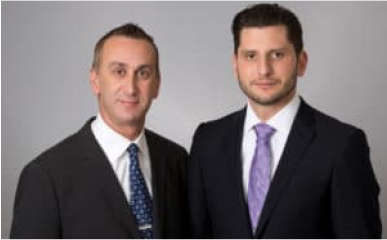
Led by Attorney Matthew A. Fraiberg (practicing since 1997, former city prosecutor with 28+ years protecting clients) and Attorney Eric L. Pernie (former police officer with insider knowledge of investigations and arrests), our firm combines prosecutorial insight, law enforcement perspective, and courtroom mastery to build strong defenses. We’re committed to protecting your rights, freedom, and long-term future — aggressively pursuing dismissals, reductions, license reinstatement, or the best possible outcome.
Whether you need confident legal advice to move forward or fierce advocacy against complex criminal allegations, count on Fraiberg & Pernie for knowledgeable preparation and relentless support.
Schedule your free, confidential consultation today at our Birmingham or Oak Park offices.
Call 248-986-2682 or contact us online now. Let our local experts fight for you in Oakland, Macomb, or Wayne County courts.
